Japan’s consumption tax (shohizei) is a value-added tax on almost all goods and services. The standard rate is 10 percent, with a reduced rate of 8 percent for food bought to take away and for newspaper subscriptions. Every rate increase has been one of the hardest fights in Japanese politics, and the tax is now the government’s largest source of revenue. This guide explains how it works, how the rate reached 10 percent, what it means for shoppers and businesses, and how tax-free shopping for visitors changes from November 2026.
How the Consumption Tax Works
The tax is charged at every stage of production and sale. A manufacturer charges it to the wholesaler, the wholesaler to the retailer and the retailer to the customer. At each stage the business deducts the tax it already paid on its own purchases and passes only the difference to the tax office. The full burden therefore falls on the final consumer, while each business pays tax only on the value it adds.
Current Rates
| Rate | National part | Local part | Applies to |
|---|---|---|---|
| 10% (standard) | 7.8% | 2.2% | Most goods and services, including alcohol, meals eaten in restaurants and catering |
| 8% (reduced) | 6.24% | 1.76% | Food and non-alcoholic drinks bought to take away or delivered; newspaper subscriptions for papers published at least twice a week |
Eat In or Take Out: The Reduced Rate in Practice
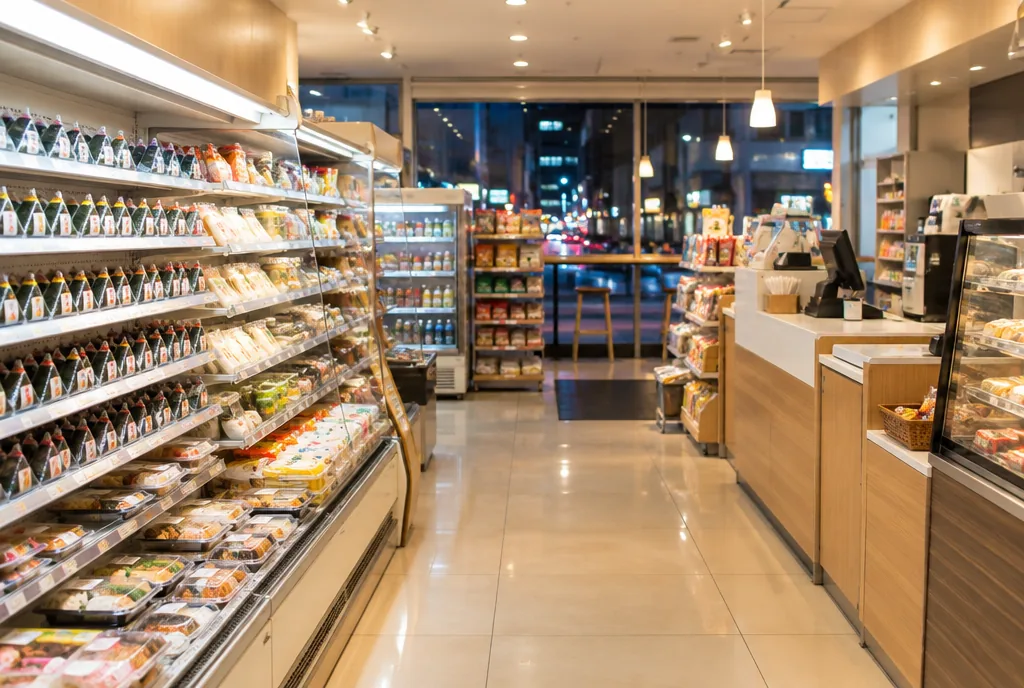
The dividing line is where the food is eaten, not what it is. A hamburger eaten at a table in the restaurant is taxed at 10 percent; the same hamburger in a takeout bag is taxed at 8 percent. Convenience stores ask whether customers will use the eat-in corner, and many chains charge the same tax-inclusive price either way, absorbing the difference. A bottle of mineral water from a supermarket is taxed at 8 percent, a can of beer at 10 percent, and a medicine or a household item at 10 percent even when bought with the groceries.
From 3 to 10 Percent: A Short History
1989: Introduction at 3 Percent
After two earlier governments failed to introduce a sales tax, the cabinet of Prime Minister Noboru Takeshita brought in the consumption tax on 1 April 1989 at 3 percent. It was deeply unpopular, and the ruling Liberal Democratic Party lost its majority in the upper house that summer.
1997: 5 Percent
Under Prime Minister Ryutaro Hashimoto the rate rose to 5 percent in April 1997, including a new 1 percent local consumption tax. The increase coincided with the Asian financial crisis and Japan’s banking troubles, and the economy fell into recession.
2012: The Tax and Social Security Law
The Democratic Party government of Prime Minister Yoshihiko Noda passed the “Comprehensive Reform of Social Security and Tax” law, which set two further steps and tied the extra revenue to social security. The law split the governing party, which lost power at the end of that year.
2014: 8 Percent
The first step took effect on 1 April 2014. Shoppers bought ahead in March, and consumer spending then fell sharply, pushing the economy into a short contraction.
2019: 10 Percent
Because of that slump, Prime Minister Shinzo Abe postponed the second step twice, from October 2015 and from April 2017. It finally took effect on 1 October 2019, together with the reduced 8 percent rate for food and cashless payment rebates meant to soften the blow.
What the Revenue Pays For
Since fiscal 2020 the consumption tax has been the largest single source of national tax revenue, bringing in more than 23 trillion yen a year and overtaking the income tax. By law the national share funds social security: pensions, medical care, long-term care and support for child-rearing. Unlike income tax, it is paid by retirees as well as workers, which is why successive governments have seen it as the way to pay for an aging society.
Reading Prices in Japan
Since April 2021 shops must display the total price including tax (sogaku hyoji). Many show both figures, for example “1,100 yen (tax included)” in large type and “1,000 yen before tax” in smaller print. Visitors used to US price tags, where sales tax is added at the register, can rely on the tax-inclusive figure as the amount they will pay.
Rules for Businesses
Small Business Exemption
Businesses with taxable sales of 10 million yen or less in the base period, generally two years earlier, are exempt from charging and filing consumption tax. Many sole traders and small shops fall under this threshold.
The Invoice System
Since 1 October 2023 buyers can deduct the tax on a purchase only if they hold a qualified invoice showing the supplier’s registration number, the applicable rate and the tax amount. Exempt suppliers cannot issue such invoices, so many freelancers and small businesses registered for the first time to keep their business customers, and in turn began paying consumption tax. Transitional rules reduce the burden for small businesses during the first years.
Tax-Free Shopping for Visitors
Short-term foreign visitors can buy goods for export without consumption tax at licensed tax-free shops. The rules change on 1 November 2026, with no transition period.
The Refund Method from November 2026
- The visitor shows a passport at a licensed shop and pays the full price including consumption tax.
- The shop records the purchase electronically.
- At the airport or seaport of departure, within 90 days of purchase, the visitor goes to a tax-free procedure terminal before checking bags, and customs confirms that the goods are leaving Japan.
- The tax is then refunded by the method agreed with the shop at the time of purchase.
The same reform ends the sealed bags for consumables such as cosmetics and food, the separate categories for general and consumable goods, and the 500,000-yen limit on consumables.
The Food Tax Debate
Rising food prices have made the reduced rate a campaign issue again. During the February 2026 election campaign the ruling party discussed suspending the tax on food altogether. In August 2026 the government of Prime Minister Sanae Takaichi instead announced a plan to cut the food rate to 1 percent for two years from April 2027, because retailers’ cash register systems need about a year to adapt to a zero rate. The enabling law still has to pass the Diet. Critics warn about the revenue lost for social security; supporters point to the relief for households that spend a large share of their income on food.
How Japan Compares
At 10 percent, Japan’s rate is low by international standards. Most European countries charge value-added tax of 19 to 25 percent. The United States has no national VAT; its states and cities levy retail sales taxes instead, which are collected only at the final sale and are added at the register rather than included in the shelf price.
Frequently Asked Questions
What is the consumption tax rate in Japan?
The standard rate is 10 percent. A reduced rate of 8 percent applies to food and non-alcoholic drinks bought to take away or delivered, and to newspaper subscriptions.
Why is takeout taxed less than eating in?
The reduced 8 percent rate covers food as a daily necessity, while eating in a restaurant counts as a service taxed at the full 10 percent.
Can tourists get the tax back?
Yes, at licensed tax-free shops. From 1 November 2026 visitors pay the tax first and receive a refund after customs confirms at departure that the goods are leaving Japan, within 90 days of purchase.
When did Japan introduce the consumption tax?
On 1 April 1989, at 3 percent. It rose to 5 percent in 1997, 8 percent in 2014 and 10 percent in 2019.