A Japanese wedding often combines a short, carefully ordered ceremony with a highly social reception, but the details can surprise visitors. A couple may choose a Shinto ceremony at a shrine or a chapel-style ceremony at a wedding venue; either way, close family usually sees the rite first, while the larger celebration unfolds later at the reception. The result is not one fixed script, but a sequence in which ritual, clothing, gifts, speeches, and legal paperwork each have a distinct job.
How a Japanese Wedding Moves From Ceremony to Celebration
Many weddings begin with either a Shinto-style ceremony or a ceremony in a chapel modeled on Christian tradition. The religious or ceremonial portion is generally for family members and very close friends. The larger circle of relatives, friends, and colleagues joins afterward for the hirōen, a reception whose name literally means a banquet of announcement.
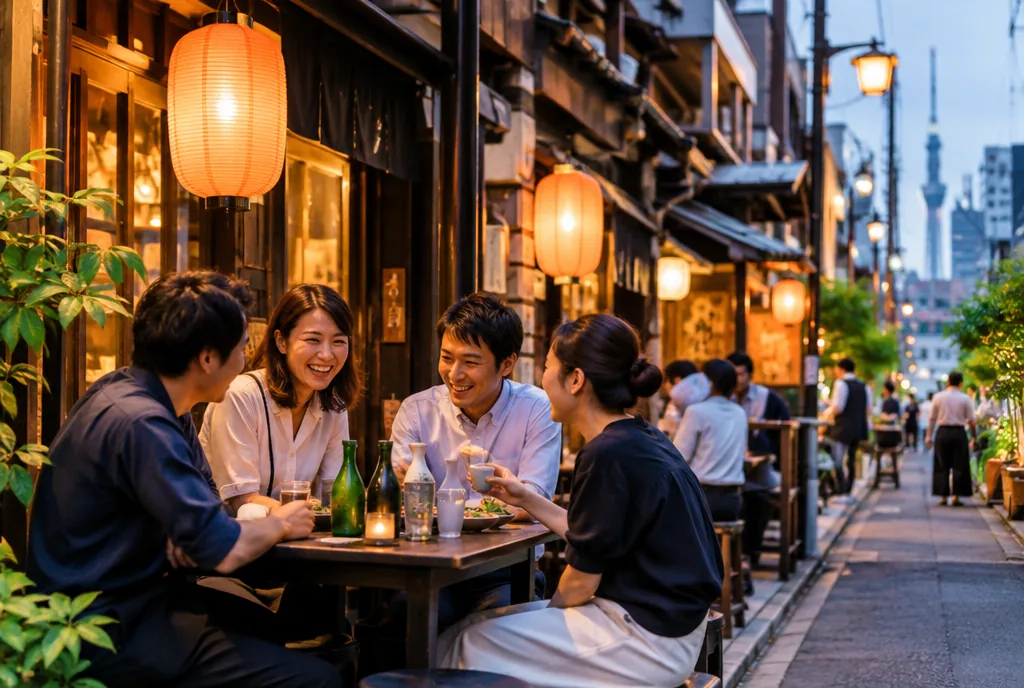
A hirōen usually lasts two to three hours and commonly has 50 to 100 guests in a hotel banquet hall. The schedule may continue with an after-party in a hotel or restaurant banquet space. That division explains why a visitor may be invited to the reception but not the ceremony: it is a matter of the event’s structure, not necessarily a measure of personal closeness.
For a Shinto ceremony, the ritual itself takes only about 20 to 30 minutes. The practical commitment is much longer. With dressing, hair, makeup, and photographs, a couple should plan to be at the location for four to six hours. A shrine wedding can therefore look serene and brief to a guest while requiring a full day of preparation behind the scenes.
A Shinto Wedding Uses Sake to Join Two Families
A Shinto wedding, or shinzen-shiki, takes place before the kami, the deities of Shinto. It is a formal report that two families are joining, rather than simply an exchange of personal promises between two people. A priest, the kannushi, and shrine maidens, or miko, guide the rite.
The standard order includes the invitation of the deities (Sanshin-no-gi), purification (Shubatsu), a prayer (Norito), the sake rite, a vow (Seishi), an offering of a sakaki branch (Tamagushi-Hairei), and shared sake for family members (Shinzoku-Hai). Watching the order makes the ceremony easier to follow: each action is part of a formal presentation to the kami.
San-san-kudo is the central shared act
The best-known ritual is san-san-kudo, meaning “three-three-nine times.” The couple drinks three sips each from three differently sized lacquered sake cups: small, medium, and large. The groom drinks first from the first cup, the bride drinks first from the second, and the groom again drinks first from the third, with the other partner following each time. Together they take nine sips.
San-san-kudo, not an exchange of rings, was traditionally the binding act. The shared sake is understood as sharing joys and hardships. Its name has also been connected with wishes for fertility, while the three cups can represent man, woman, and child or heaven, earth, and humankind.
A couple can hold this ceremony in the main hall or a ceremonial pavilion of an active shrine. Major shrines offer wedding programs, but shrine guest lists are often capped at 20 to 40 people and available dates can be limited. Many couples instead use a Shinto altar room at a hotel or wedding venue. A licensed priest can lead the same kind of rite there, while ceremony, photographs, and reception remain under one roof.
What the Bride and Groom Wear Signals the Formality of the Day
A traditional bride wears several kimono layers. The outermost and most formal layer makes the strongest visual statement: either a white shiromuku or a colorful iro-uchikake. Both are silk outer garments worn unbelted over the kimono and obi beneath them.
| Wedding garment | What distinguishes it |
|---|---|
| Shiromuku | A completely white outer kimono. Its patterns appear through white weaving techniques; the name means “white pure innocence.” |
| Iro-uchikake | A colorful outer kimono, often in red, white, or black, with embroidery and gilded or silvered couching threads. |
| Wataboshi | A white bridal head covering worn outdoors only with a shiromuku; it is removed for the reception. |
| Montsuki haori hakama | The groom’s formal black silk kimono with five family crests, a haori jacket, and hakama trousers. |
An iro-uchikake may carry cranes, pines, or flowers in its decoration. The word uchikake means “thrown over” or “draped over,” an apt description of the elaborate outer robe, which developed as formal upper-class clothing in the Kamakura period.
The bride may also wear a tsunokakushi, a headpiece whose name is sometimes translated as “horn hider.” A popular explanation says it conceals horns of jealousy toward a mother-in-law. That explanation is not settled fact: linguists treat it as a possible folk etymology. The headpiece originated in the Edo period as clothing women wore when visiting Buddhist temples before it became associated with bridal dress.
Today, the groom may wear montsuki haori hakama or a Western business suit even when the bride wears kimono. The formal kimono is now worn in practice mainly by the groom and sometimes his father, which is why it is not a guest outfit.
Wedding Rings Are Familiar, but They Are Not the Oldest Symbol
Japanese couples do wear wedding rings, although rings are a comparatively recent part of the wedding. They were imported after World War II and became standard only from the 1970s onward. In a modern Shinto ceremony, the ring exchange, yubiwa-no-gi, can be placed between the vow and the sakaki-branch offering.
About 80 to 90 percent of wedding rings sold in Japan are platinum. They are worn on the fourth finger of the left hand, known in Japanese as the kusuri-yubi, or “medicine finger,” in connection with the folk belief in the Vena amoris. Engagement rings commonly fall in a budget range of 250,000 to 500,000 yen, but that is separate from the ceremony and reception budget.
Older visible signs of marriage included changing a bride’s hairstyle from shimada to marumage, in some periods blackening the teeth (ohaguro), and changing outfits during the celebration.
Guests Bring Goshugi and Follow a Few Precise Rules
For an invited guest, the most important practical item is goshugi, a cash gift placed in a decorative shugi-bukuro envelope and presented at the reception desk. The cash should be fresh new bills, preferably 10,000-yen notes. Friends and colleagues commonly give 30,000 yen; relatives and a direct supervisor commonly give 50,000 to 100,000 yen.
Numbers are part of the etiquette. A couple invited together often gives 50,000 yen jointly rather than 60,000 yen, preserving an odd total. Amounts of 40,000 and 90,000 yen are avoided because their sounds evoke death and suffering. The envelope’s mizuhiki cord should use a formal fixed knot, either awaji-musubi or musubi-kiri. A bow knot is unsuitable because it symbolizes repeatability.
- Choose a dark business suit for a male guest rather than montsuki haori hakama.
- Avoid white and near-white clothing, which belong to the bride.
- Avoid an entirely black outfit, a color associated with mourning.
- Keep shoulders and a deep neckline covered during the ceremony.
- Bring the goshugi in its envelope; a furoshiki or fukusa cloth may wrap or hold it when presented.
Guests also receive hikidemono, return gifts handed out when they leave. The customary value is roughly 15 to 20 percent of the expected goshugi. A traditional set can include a main gift, sweets such as baumkuchen, and a lucky item such as a rice paddle. Catalog gifts have been standard since the early 2000s, allowing guests to choose an item themselves. Take the gift home: leaving it behind is a common mistake for overseas guests. A bag can weigh two to three kilograms, so large receptions may send it home by delivery service instead.
The Reception Makes Gratitude Public
The hirōen is not merely a meal after the ceremony. It is the social announcement of the marriage, with greetings, goshugi, and a defined program of speeches. A reception commonly has three to five speeches: an opening toast, often by an older guest; speeches for each side of the couple; and a closing address.
Most speeches take three to five minutes. A reliable structure introduces the speaker’s connection to the couple, tells a complimentary anecdote, offers advice, and ends with congratulations. This is not the setting for a Western-style best-man roast. There is no direct equivalent of the best-man speech; the groom gives a gratitude-focused closing speech, and embarrassing stories are inappropriate.
Reception Costs Rise With Every Guest
When people ask for the average cost of a Japanese wedding, it helps to separate the reception from the full wedding. A reception costs the couple roughly 30,000 to 40,000 yen per guest, including food, drinks, venue, and return gifts. For 50 to 100 guests, the reception alone therefore comes to about 1.5 million to 4 million yen.
| Cost area | Typical figure |
|---|---|
| Reception per guest | About 30,000–40,000 yen |
| Reception for 50–100 guests | About 1.5–4 million yen |
| Hikidemono for 60 guests | About 350,000–500,000 yen |
| Engagement ring | About 250,000–500,000 yen |
Goshugi helps meet reception expenses; it is described as covering roughly one-third to one-half of the giver’s own food and venue cost. Still, it is a guest’s formal gift, not a payment to calculate casually. The figures also show why the guest list matters so much: moving from 50 to 100 people adds roughly 1.5 million to 2 million yen to the reception alone.
Legal Marriage Happens at the Municipal Office
A Shinto rite at a shrine and a chapel wedding can be spiritually or personally significant, but neither makes a marriage legal in Japan. Legal marriage begins with filing the kon’in todoke at the municipal office for entry in the family register, the koseki. Couples often treat the registration and the ceremony as two connected but separate parts of marrying.
The filing requires two witnesses aged 18 or over, of any nationality, and both partners must be at least 18. A Certificate of Acceptance of Notification of Marriage costs 1,400 yen in the decorative version or 350 yen in A4 format. The koseki is the official family register for Japanese citizens and records life events including marriage.
Chapel weddings follow the same legal distinction. They are a common alternative to Shinto rites, and the chapel is usually part of a wedding venue. The familiar rhythm remains: a small ceremony, then a larger reception dinner and after-party.
Common Misunderstandings Can Make a Wedding Harder to Read
“Every Japanese wedding is a shrine wedding.” Shinto and chapel-style ceremonies are both common. A Shinto ceremony itself is also more modern in its present form than many assume: the first contemporary one took place at the Imperial Palace in 1900, followed by the first public ceremony at Hibiya-Daijingu Shrine in 1901.
“The ceremony completes the legal marriage.” It does not. Registration at the municipal office is the legal act, whatever the ceremony’s religious style.
“Rings are the traditional centerpiece.” The older ceremonial centerpiece is san-san-kudo. Rings are now familiar, but their widespread use dates from the postwar period and became standard from the 1970s.
“A formal guest should wear the most traditional clothing possible.” Not in this case. Montsuki haori hakama can upstage the groom, so male guests normally wear a dark business suit.
Frequently Asked Questions
What happens at a Japanese wedding?
A couple usually holds a Shinto or chapel-style ceremony for close family and friends, followed by a hirōen reception for a broader group. The reception includes a meal, goshugi gifts, speeches, and return gifts for guests.
What are Japanese wedding traditions?
Key traditions include the san-san-kudo sake ritual, layered bridal kimono, formal cash gifts in shugi-bukuro envelopes, reception speeches, and hikidemono return gifts. Practices vary by couple and venue.
What do brides wear at a traditional Japanese wedding?
A bride may wear a white shiromuku or a colorful iro-uchikake as the outer layer over a kimono and obi. A shiromuku can be paired with a wataboshi outdoors, while a tsunokakushi is another traditional headpiece.
Do Japanese people wear wedding rings?
Yes. Wedding rings are common today, usually platinum, but they are newer than the san-san-kudo ritual. In some modern Shinto ceremonies, the exchange is inserted between the vow and the branch offering.
What is the average cost of a Japanese wedding?
The reception alone is roughly 30,000 to 40,000 yen per guest. With a typical 50 to 100 guests, that means about 1.5 million to 4 million yen before treating the figure as a complete wedding budget.
What should guests wear and bring?
Guests should dress formally without wearing white, near-white, all black, or exposed shoulders at the ceremony. They bring goshugi in fresh bills inside a shugi-bukuro envelope and should take the hikidemono return gift home.