Facts about Japan become more revealing when the numbers sit beside the daily details: an island country of 6,852 islands runs high-speed trains carrying more than a million passengers a day, while a Christmas meal can mean fried chicken and strawberry cake. Japan is roughly the size of California or Germany, yet its capital region is the world’s largest urban area. These contrasts explain much of what makes the country so memorable. Together, the sections below offer more than 20 interesting facts about Japan, with the context that makes each one matter.
Facts about Japan at a glance put its scale in perspective
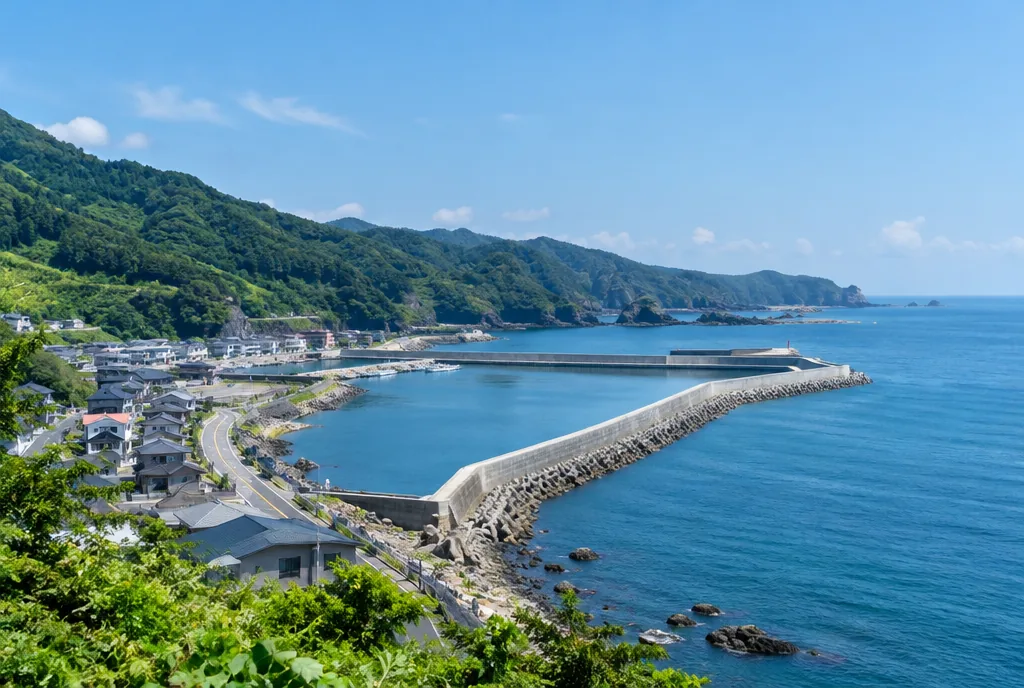
Japan is an island nation along the Pacific coast of East Asia. Its roughly 6,852 islands extend for more than 3,000 kilometers, a distance that helps explain why a single description of the country can feel incomplete. The four main islands are Honshu, Hokkaido, Kyushu, and Shikoku. Honshu alone covers close to 228,000 square kilometers and ranks as the world’s seventh-largest island.
The country’s total land area is about 378,000 square kilometers. That is a useful scale comparison for American readers: Japan is about the size of California and comparable in area to Germany. Its coastline, however, is far longer than a simple map outline suggests, measuring 29,751 kilometers.
| Measure | Figure | Why it stands out |
|---|---|---|
| Islands | About 6,852 | They stretch more than 3,000 km along the Pacific. |
| Total land area | About 378,000 km² | Comparable to Germany or California. |
| Honshu | About 228,000 km² | Japan’s largest island and the world’s seventh-largest island. |
| Coastline | 29,751 km | A long edge for a country with a California-sized land area. |
| Forest cover | About 66% | Forest occupies about two-thirds of the land. |
| Agricultural land | About 14% | A much smaller share is used for agriculture. |
Land cover gives another compact answer to what Japan is like. About 66% of the country is forested, while about 14% is agricultural land. The result is a country where the available land for cities, farming, and infrastructure is concentrated within a smaller part of the total area than the national map alone might imply.
Seasonal weather adds another numerical reference point. Tokyo receives average annual precipitation of about 1,530 millimeters. Japan has distinct seasons, including a rainy season called tsuyu that runs from June to the middle of July. Paired with the 3,000-kilometer island chain, that detail is a reminder that “Japan” describes a long physical span rather than one uniform setting.
Mount Fuji and four tectonic plates explain a dramatic landscape
Mount Fuji is Japan’s highest mountain at 3,776 meters. It is also an active volcano, not an extinct one, and it has been a UNESCO World Heritage site since 2013. Its last eruption was the Hoei eruption of 1707. The long quiet period does not change its active classification.
Fuji is only one part of a larger geological pattern. Japan lies at the meeting point of the Eurasian, North American, Pacific, and Philippine plates. That location accounts for frequent earthquakes and volcanic eruptions. Officially, Japan had 111 active volcanoes in 2017, around 10% of all active volcanoes in the world. For a relatively compact country, that is a striking combination: a single landscape contains extensive forests, a 3,776-meter volcano, and a long chain of islands created in a tectonically active setting.
The practical lesson behind the scenic image of Fuji is simple. Japan’s geography is not a backdrop separate from everyday life; its mountains, islands, coastline, and geology are basic facts needed to understand the country’s shape.
Japan’s population is concentrated in cities but is getting smaller
Japan has about 123 million people. That makes it the world’s 12th-most populous country and home to about 1.5% of the global population. The national population density is about 336 people per square kilometer, but that national average masks a sharp difference between major metropolitan areas and other parts of the country.
Urban life is central to the national picture: 93.4% of the population lives in urban areas. The Tokyo metropolitan area has about 37 million people and is the world’s most populous urban agglomeration. Tokyo, the capital and seat of the national government, has about 14.3 million residents, roughly a tenth of Japan’s population. It is also home to the imperial family.
A closer comparison shows the concentration clearly. Tokyo Prefecture recorded 6,402.6 people per square kilometer in 2020, almost 19 times the national density. The Greater Tokyo Area, which includes Tokyo and the prefectures of Saitama, Kanagawa, and Chiba, contains about one quarter of Japan’s total population. Tokyo is therefore a huge part of the national story, but it is not a substitute for the whole country.
Japan’s population is also declining and aging. In 2024, it fell by 0.55 million from the previous year to 123.80 million. About 30% of residents are age 65 or older, making Japan one of the world’s oldest societies. Life expectancy illustrates another side of the population profile: in 2025, it was 81.35 years for men and 87.33 years for women. Japanese women had led the world for 41 consecutive years.
At age 65, women in Japan had the world’s highest remaining life expectancy, 24.9 years in 2024. Health comparisons also show lower rates than the OECD average for two measures: preventable mortality was 86 per 100,000 people compared with an OECD average of 145, while treatable mortality was 49 per 100,000 compared with 77.
Japan has an emperor, a parliament, and 47 distinct prefectures
Japan is a constitutional monarchy with a bicameral parliament called the National Diet. The emperor is the symbol of the state and has no political power. Emperor Naruhito became the 126th emperor on May 1, 2019, following the abdication of his father, Akihito.
The imperial house is described as the world’s oldest continuing hereditary monarchy. According to legend, its origins reach back to 660 BCE; that date comes from tradition, not documented history.
For administration, Japan has 47 prefectures. Their formal categories are more varied than the single English word suggests: there are 43 prefectures known as ken, two urban prefectures known as fu (Osaka and Kyoto), one metropolis known as to (Tokyo), and one district known as do (Hokkaido). This 47-part structure is a useful correction to the impression that Japan is governed only from Tokyo.
Two national symbols carry unusually precise legal dates. The flag, the Hinomaru, is a red sun disk on a white field and became Japan’s official national flag by law on August 13, 1999. The national anthem, “Kimigayo,” was also established by law in 1999. Its text comes from a poem in the 10th-century Kokin Wakashu.
The arrangement makes two separate points easy to miss. Japan’s state structure includes a constitutional monarch without political power, while the National Diet is a bicameral parliament. Meanwhile, the 47 prefectures include four formal types rather than a single uniform category. Those terms make the country’s political map more specific than a simple capital-and-provinces description.
What is Japan known for? The Shinkansen gives one answer
Among the most widely recognized fun facts about Japan is that it introduced the world’s first high-speed train. The Tokaido Shinkansen opened on October 1, 1964, in time for the Tokyo Olympics. The original 0 Series traveled at 210 kilometers per hour. Modern E5/Hayabusa trains can reach up to 320 kilometers per hour.
Speed is only half the point. Since Shinkansen service began in 1964, there has not been a single passenger fatality caused by an accident. More than one million passengers use Shinkansen high-speed trains every day. Taken together, those figures explain why the trains are a more meaningful answer to “what is Japan known for?” than a generic image of fast technology: they connect a 1964 milestone, 320-km/h service, daily scale, and a remarkable safety record.
Japan is also the world’s third-largest automobile producer, with Toyota, Honda, and Nissan among its manufacturers, and it is a leader in electronics and robotics. Its nominal gross domestic product is about $4.4 trillion, making it the fourth-largest economy in the world. GDP per person is about $35,700, and growth is modest at under 1%. The national currency is the Japanese yen, written ¥.
Those economic figures come with a counterpoint. Government debt exceeds 230% of GDP, the highest figure among industrialized countries. After decades in which Japan struggled with deflation, inflation has returned to around 2%. Interesting facts about Japan are strongest when they include both its visible achievements and the numbers that complicate an easy story.
Everyday details make the most surprising Japan facts
Japan has about 5.5 million vending machines, roughly one for every 23 people and the highest density in the world. The first Japanese vending machine dates to 1888. Invented by Tawaraya Koshiki in Shimonoseki, it sold tobacco and used a mechanism inspired by karakuri, traditional Japanese mechanical dolls. The modern count and the 1888 origin show that this familiar feature of street life has both scale and history.
A few basic identifiers are equally useful for travelers and readers: the official language is Japanese, the currency is the yen, the international calling code is +81, and the country-code top-level domain is .jp. These are small facts, but they turn an abstract country profile into information people can actually recognize and use.
The 80% rule is called hara hachi bu
The phrase hara hachi bu refers to a food rule rooted in Confucianism: eat until you are 80% full. It is especially associated with Okinawa and with the longevity of its residents. The practice was written down in 1713 by Kaibara Ekiken in Yojokun, described as Japan’s first comprehensive guide to healthy living.
Older Okinawans who practice hara hachi bu typically consume 1,800 to 1,900 kilocalories a day and have body mass indexes from 18 to 22. Those figures describe the people and practice cited with the rule; they do not turn it into a universal prescription. The curiosity lies in how a short phrase about stopping before complete fullness has remained recognizable for more than three centuries.
Christmas in Japan is festive, secular, and very specific
Christmas in Japan is not a religious public holiday. Fewer than 1% of the population is Christian, and the celebration is widely secular. Two food traditions stand out: KFC and kurisumasu keki, a strawberry-and-cream sponge cake found widely in Japan during the season.
The KFC custom began with a 1974 marketing campaign. A customer had said that turkey was unavailable in Japan and that KFC was the alternative; the company turned that idea into a campaign. The result has become one of the best-known cultural curiosities connected with the country.
- Christmas is not a religious public holiday in Japan.
- Less than 1% of the population is Christian.
- The KFC Christmas tradition began with a 1974 marketing campaign.
- An estimated 3 to 4 million Japanese families eat KFC at Christmas.
- December 24 is KFC’s biggest sales day of the year, at about 10 times the sales of an average day.
The strawberry cream sponge cake is the traditional Japanese Christmas cake. Together with the KFC tradition, it demonstrates why holiday customs should not be assumed to work the same way in every country.
Common myths miss the fuller picture of Japan
- Myth: Japan is one island. Japan consists of about 6,852 islands. Honshu, Hokkaido, Kyushu, and Shikoku are the four main ones.
- Myth: Tokyo is all of Japan. The Tokyo metropolitan area has about 37 million people, but Japan’s national population is about 123 million. Greater Tokyo holds about one quarter of that total, not all of it.
- Myth: Mount Fuji is extinct. Fuji is an active volcano. Its last eruption was in 1707, and Japan had 111 active volcanoes in 2017.
- Myth: Christmas works like a U.S. religious holiday. In Japan it is widely secular, and KFC plus strawberry cream sponge cake are defining seasonal references.
These corrections matter because the most interesting facts about Japan are often the qualified ones. The country can be both heavily urbanized and two-thirds forested, technically advanced and shaped by a tradition written down in 1713, or associated with Fuji while the official 2017 count listed 111 active volcanoes nationwide.
Frequently Asked Questions
What is great about Japan?
Japan brings together a 3,776-meter active volcano, 66% forest cover, the world’s largest urban agglomeration, and high-speed trains with more than one million daily passengers. The appeal is not one single feature but the contrast between these measurable facts.
What is the 80% rule in Japan?
The 80% rule is hara hachi bu, a Confucian-influenced practice of eating until 80% full. It is associated especially with Okinawa and was recorded in Kaibara Ekiken’s 1713 guide Yojokun.
What are some interesting facts about Japan?
Japan has about 6,852 islands, 5.5 million vending machines, and 111 active volcanoes in the 2017 official count. Its Tokaido Shinkansen was the world’s first high-speed train, opening in 1964.
What are five facts about Christmas in Japan?
It is not a religious public holiday; fewer than 1% of the population is Christian; the KFC custom began with a 1974 campaign; an estimated 3 to 4 million families eat KFC at Christmas; and December 24 brings about 10 times KFC’s average daily sales.
Is Mount Fuji still active?
Yes. Mount Fuji is classified as an active volcano. Its last eruption was the Hoei eruption of 1707, and it rises 3,776 meters as Japan’s highest mountain.