An onsen in Japan is a bath supplied by a natural thermal source, not simply a hot pool. The water may arrive clear and quiet, smell faintly of sulfur, or be hot enough to demand a slow entry. Knowing the onsen rules turns what can feel intimidating on a first visit—communal bathing, no swimsuit, unfamiliar signs—into one of Japan’s most distinctive travel experiences.
What makes an onsen a real Japanese hot spring?
Japanese law gives onsen a precise meaning. Under the Hot Spring Act, it is hot water, mineral water, water vapor, or other gas emerging from underground, excluding hydrocarbon natural gas. The source qualifies when it is at least 25°C (77°F), or when it contains a legally specified concentration of one of 19 minerals.
That definition matters because a sento and an onsen may look similar once you are inside. A sento is a public bath that heats regular tap water. An onsen uses naturally occurring thermal water that meets the legal standard. Japan has roughly 27,000 natural onsen sources across about 3,170 locations, more geothermal sources than any other country.
Source temperature is classified in four bands: cold springs below 25°C, warm springs from 25°C to 34°C, hot springs from 34°C to 42°C, and extra-hot springs above 42°C. Most operators adjust bathwater to about 41°C. In the tub, however, temperatures are typically 40–44°C—hot enough that rushing in is a bad idea.
Japanese hot springs differ by temperature, pH, and minerals
Water is part of the experience, not background scenery. Onsen are also grouped into six pH ranges, from strongly acidic below pH 2 to alkaline above pH 8.5. Japan’s classification recognizes 10 mineral-water types: simple thermal, carbon dioxide, sodium bicarbonate, chloride, iodine, sulfate, iron, sulfur, acidic, and radioactive springs.
| Spring type | What to know before you soak |
|---|---|
| Simple thermal spring | It has less than 1,000 mg of dissolved solids per kilogram, yet qualifies if it reaches 25°C. It is considered especially gentle for first-time bathers. |
| Chloride spring | Chloride is the principal component. The water tastes salty and is traditionally recommended for muscle pain and sensitivity to cold because it helps the body retain warmth. |
| Sodium bicarbonate spring | Often called Bihada-no-yu, or “beauty bath,” because bicarbonate dissolves excess sebum and dead skin cells. |
| Sulfur spring | Expect an egg-like smell, slightly cloudy water, and little soap foam. These springs have long been sought out for skin conditions and rheumatic complaints. |
The water’s character is not a promise of a cure. It is simply a useful clue about what you are bathing in and why a facility may give specific after-bath instructions. Usually you do not rinse after soaking, but after acidic or sulfur springs, or if your skin is sensitive, it is better to rinse off.
Follow these onsen rules from the shoe locker to the bath
The communal bath is for soaking after you are clean. The order of events is more important than knowing every Japanese word on the wall.
-
Read the entrance curtains and store your shoes. Men’s entrances commonly have a blue curtain and the character 男; women’s entrances commonly have a red curtain and 女. Put shoes in the shoe locker before the changing room.
-
Undress in the changing room. Remove all clothing and accessories, including underwear and swimwear. In a standard shared bath, bathing suits are not allowed. Take only a hand-sized towel, called a tenugui, into the bathing area; leave everything else in a locker or basket.
-
Wash while seated. At a shower station, sit on the low stool and wash your entire body—from face and underarms to legs and feet. Soap and shampoo are almost always provided. Rinse thoroughly so no soap enters the shared water.
-
Keep the small towel out of the tub. Fold it on your head or leave it at the pool edge. Never dip it in the water or rub yourself with it there; the towel is treated as unclean.
-
Enter in stages. Start with feet and knees, then ease in toward your shoulders. That gradual approach is sensible in water that may be 40–44°C.
Advertisement
Privacy rules are just as firm. Phones and cameras are forbidden in the bathing area, and many facilities also prohibit them in the changing room. Quietly following the posted house rules is part of sharing the space with other bathers.
The 5-minute rule keeps a hot soak from becoming too much
The “5-minute rule” is not a requirement to leave after exactly five minutes. It describes a safer rhythm: take a short soak, sit out for about five minutes, then decide whether to return. The Japan Onsen Association’s general recommendation is 3–10 minutes per session, starting with one or two sessions a day. People accustomed to onsen may build up to 15–20 minutes per session and two or three sessions daily.
For a first visit, 5–10 minutes in the water followed by a pause at the edge is a practical approach. Do not stay in the bath for more than 30 minutes at a stretch. Longer bathing can strain circulation, cause dehydration, or lead to loss of consciousness. Plan no more than three bathing sessions in a day.
Drink a glass of water before you enter, especially after waking or after going without fluids. Alcohol before or during a bath is strictly prohibited, and intoxicated guests can be removed. It is also better not to bathe immediately before or after a full meal. Afterward, dry yourself with the towel, rest for 30 minutes, and drink water. Unless the spring is acidic or sulfurous, or your skin is sensitive, leave the minerals on your skin rather than rinsing them away.
Tattoo policies vary, so check before you go
Tattoos are not automatically forbidden everywhere, but policy is set by each operator. In 2015, about 56% of onsen operators had a complete tattoo ban. The historical reason was the effort to exclude yakuza and other organized criminals traditionally associated with large body tattoos, rather than a judgment about a traveler’s tattoo.
Rules are changing with international tourism. Estimates suggest that about 30% of facilities now allow tattoos when covered by patches or stickers, while around 20% accept tattoos without restriction. Those are broad estimates, not a substitute for checking the exact bath you plan to use.
There are clear alternatives. All seven public bathhouses in Kinosaki Onsen, including Mandara-Yu, Goshono-Yu, and Yanagi-Yu, allow tattoos of any size without covering. Dogo Onsen also permits tattoos in all three public baths: Honkan, Asuka-no-Yu, and Tsubaki-no-Yu. A private rental bath can remove the uncertainty altogether.
An onsen ryokan gives beginners more privacy and time
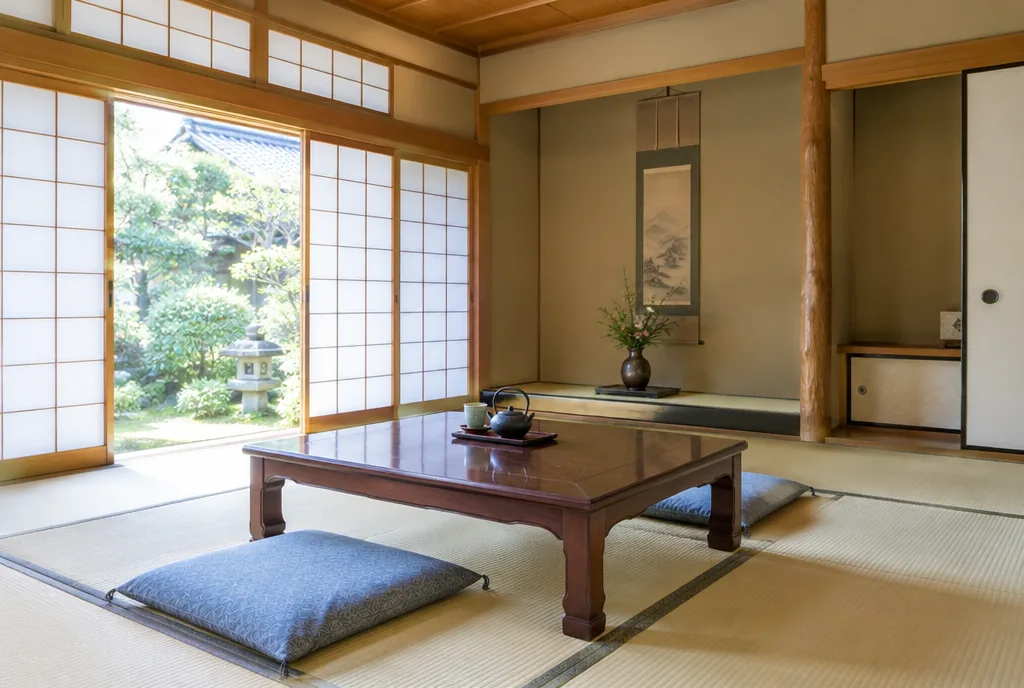
An onsen ryokan is a traditional inn with its own thermal spring. Overnight guests generally use the house bath free of charge and may also have access to the town’s public baths. Dinner and breakfast are usually included, while a yukata cotton robe and geta wooden sandals are often supplied for the stay.
In an onsen town such as Kinosaki, it is customary to walk from bath to bath in a yukata and geta. For groups that want privacy, many ryokan rent family baths, known as kazoku-buro, or private baths, kashikiri-buro. A booking generally lasts 30–60 minutes and typically costs 2,000–4,000 yen per session. It can suit mixed groups, tattooed guests, and anyone who wants to learn the routine without a public audience.
Mixed bathing, called konyoku, still exists in some rural areas of Hokkaido, Tohoku, and Kyushu. It follows the same nude-bathing custom unless signage explicitly says otherwise. Do not assume a swimsuit is welcome just because a bath is mixed.
Choose the best onsen in Japan by the experience you want
There is no single best onsen in Japan. The classic “Three Great Onsens of Japan” are Kusatsu in Gunma, Arima in Hyogo, and Gero in Gifu. Each is a credible starting point; the better choice depends on whether you want unusual water, historic atmosphere, easy access, or a town built around bath-hopping.
-
Kusatsu Onsen: Its natural flow exceeds 32,000 liters per minute. The strongly acidic water measures pH 1.7–2.1 and emerges at 51–94°C. At the Yubatake hot-water fields, about 4,000 liters per minute rise from the ground, then wooden paddles are used in the yumomi ceremony to cool it to bathing temperature.
-
Kinosaki Onsen: Founded in 720, this town combines seven tattoo-friendly public baths with the yukata walk between them. A local legend says a wounded white stork revealed the spring by healing its leg there.
-
Dogo Onsen: With a history of more than 1,000 years, it appears in the Man’yōshū around 759. Its Honkan main bathhouse inspired Studio Ghibli’s Spirited Away.
Advertisement -
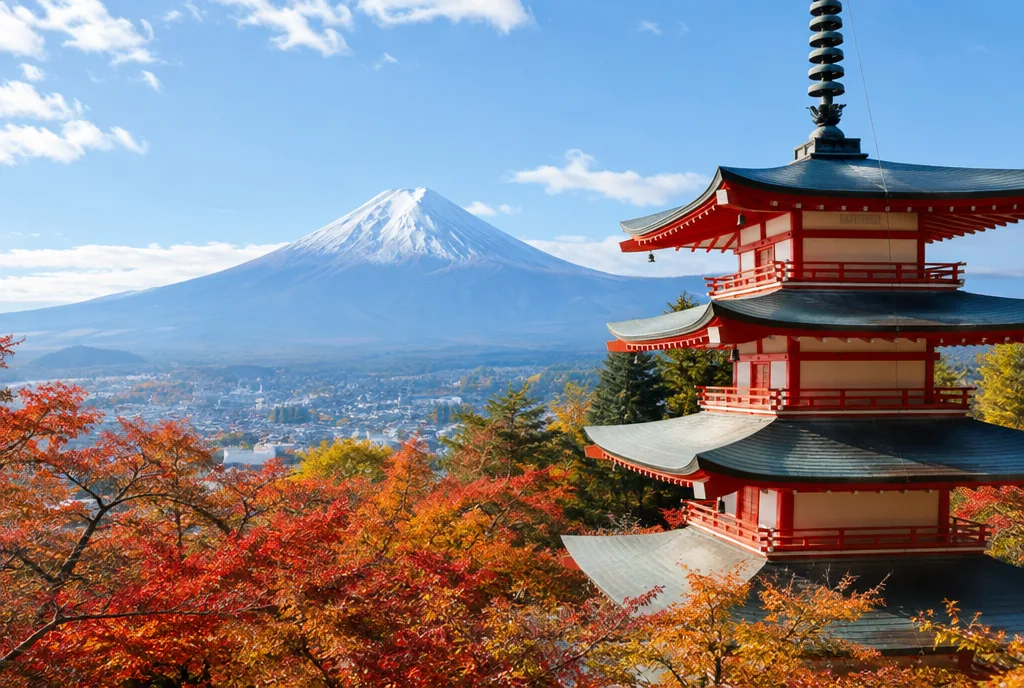
Hakone: More than 20 springs and roughly 300 ryokan lie about 1.5 hours by train from Tokyo, with a well-known view of Mount Fuji.
-
Beppu: This Kyushu city has more than 2,000 sources, more than 4 million overnight guests a year, and the steam fields and seven “hell” springs known as Jigoku.
Health limits matter more than how long you can stay in
Hot water changes the demands on the body. Japan’s Ministry of the Environment advises people with high blood pressure, heart disease, or a history of brain hemorrhage to avoid water hotter than 42°C. Before immersion, pour water over your arms and legs to reduce a sudden blood-pressure rise.
People with severe heart or lung disease that causes shortness of breath, and people with severe kidney disease, should not bathe in an onsen because water pressure places too great a burden on the body. The Ministry also makes one point plain: no onsen cures cancer. A short visit may feel psychologically refreshing, but it is not a medical treatment.
Some people on an extended onsen cure experience fatigue, insomnia, or a skin rash 3–7 days after starting. This “bathing reaction” is a signal to reduce the frequency or stop. If a spring has a designated drinking point, use it only as marked: the recommended amount is 100–150 ml at one time and no more than 500 ml a day, with important health-related exceptions.
Misunderstandings that can spoil a first onsen visit
-
“I should wear a swimsuit.” In a normal communal onsen, the opposite is true: guests bathe naked. The exceptions are explicitly marked mixed baths or private bookings.
-
“The tub is where I wash.” The tub is for soaking. Clean and rinse fully at the shower station first.
-
“A small towel is fine in the water.” It is not. Keep it on your head or at the pool edge.
-
“Longer is always better.” It is not. Use short sessions, a five-minute seated break, hydration, and a daily limit of three sessions.
Advertisement -
“Every bath has the same tattoo rule.” Policies differ. Kinosaki and Dogo are notable tattoo-friendly options, while another bath may require coverage or refuse entry.
Frequently Asked Questions
What exactly is an onsen in Japan?
An onsen is a natural underground source of hot water, mineral water, steam, or other qualifying gas under Japan’s Hot Spring Act. It must be at least 25°C or meet a listed mineral standard. A sento, by contrast, heats tap water.
Why aren’t tattoos allowed in some onsen in Japan?
Historic tattoo bans were intended to exclude yakuza and other organized criminals associated with large tattoos. Rules now vary by facility: some allow covered tattoos, some allow all tattoos, and some still prohibit them.
What is the 5-minute rule in Japan?
It means taking a seated break of about five minutes between short hot-water soaks. Start with 3–10 minutes per session; 5–10 minutes is a practical first-visit range.
Can I wear a swimsuit in a Japanese hot spring?
Not in a standard shared onsen. Remove swimsuits and underwear in the changing room, wash first, and use only a small towel outside the water. Follow any explicit exception on the signs.
What are the best onsen in Japan for first-time visitors?
Kinosaki offers seven public baths that accept tattoos and a walkable bath-hopping culture. Hakone is about 1.5 hours from Tokyo, while Kusatsu offers exceptionally acidic, high-flow water and the Yubatake cooling tradition.