Japanese Buddhism is not one practice or one belief. It is a family of traditions that arrived from Korea in the sixth century, took root through court patronage, and became part of ordinary life through home altars, funerals, memorials, temple visits, and seasonal observances. Zen is its best-known face abroad, but Pure Land devotion, Nichiren chanting, esoteric Shingon ritual, and the long relationship with Shinto are just as important to understanding the religion of Japan.
How Buddhism reached Japan and became a public faith
Buddhism reached Japan through the Korean kingdom of Baekje, also called Kudara, around the middle of the sixth century. The official introduction is dated either 538 or 552 in the Nihon Shoki chronicles. King Seong of Baekje sent Emperor Kinmei a diplomatic mission that included a gilt-bronze Buddha statue, Buddhist sutras, and monks and nuns.
The new religion immediately became a court issue. The Soga clan supported Buddhism, while the Mononobe and Nakatomi clans opposed it. Their rivalry ended in a brief armed conflict: after the Soga victory at the Battle of Shigisan in 587, Buddhism was officially adopted. Soga no Umako then built Hoko-ji between 588 and 596, Japan’s first full Buddhist temple.
Prince Shōtoku, regent under Empress Suiko, helped turn patronage into a public program. He is credited with establishing Buddhism as a state religion, writing commentaries on three sutras, and building Shitenno-ji in Osaka. His 604 Seventeen-Article Constitution promotes wa, or harmony, and calls for reverence for the Three Treasures: Buddha, Dharma, and Sangha.
By the Nara period, from 710 to 794, Buddhism was the de facto state religion. Emperor Shōmu ordered the construction of Tōdai-ji and its 15-meter gilt-bronze Great Buddha, completed in 752. The scale matters: Buddhism was no longer only a court gift or a disputed teaching; it had become visible in one of the country’s largest religious monuments.
Japanese Buddhism offers several routes, not one doctrine
The earliest scholastic traditions are known as the six Nara schools: Sanron, Jōjitsu, Kusha, Hossō, Kegon, and Ritsu. They arrived from Korea and China in the late sixth and seventh centuries. Hossō, for example, was introduced in 654 by the monk Dōshō after he studied in China under Xuanzang.
Two influential Heian-period schools followed. Saichō founded Tendai on Mount Hiei in 788, with the Lotus Sutra as its supreme scripture. Kūkai founded Shingon, the “True Word School,” one of the few surviving Vajrayana, or esoteric Buddhist, lineages in East Asia. He established Mount Kōya as Shingon’s headquarters in 816; it remains a major pilgrimage destination with more than 100 temples.
Saichō and Kūkai had traveled to Tang China on the same mission in 804, though on separate ships. They initially exchanged texts and letters, then fell out around 816 over their differences about esoteric teaching. Their story shows that Japanese Buddhism developed through debate as well as borrowing. Tendai itself developed Taimitsu, an esoteric tradition that combined Lotus Sutra teaching with Vajrayana ritual, alongside Shingon’s Tomitsu.
From the late twelfth century, a new wave of schools emerged that remain especially prominent today. Hōnen founded Jōdo-shū, or Pure Land Buddhism, in 1175. Its central practice is faithful recitation of the nembutsu: “Namu Amida Butsu,” meaning homage to Amitabha Buddha. His disciple Shinran founded Jōdo Shinshū and taught that even one nembutsu uttered in faith is enough, because salvation depends entirely on Amida’s “Other Power,” or tariki.
Nichiren Buddhism takes a different approach. Founded by the priest Nichiren, it centers on chanting “Namu Myōhō Renge Kyō” before a mandala called the Gohonzon. Nichiren taught that all beings possess Buddha-nature and can attain Buddhahood in this lifetime. He was also an unusually forceful critic: he named Pure Land, Zen, Shingon, and Ritsu the “four great enemies” of Buddhism.
| Tradition | Founder or key figure | Defining focus |
|---|---|---|
| Tendai | Saichō | The Lotus Sutra and a synthesis that includes esoteric practice |
| Shingon | Kūkai | Esoteric Vajrayana ritual, centered on Mount Kōya |
| Pure Land | Hōnen and Shinran | Nembutsu devotion and reliance on Amida’s Other Power |
| Nichiren | Nichiren | Devotion to the Lotus Sutra through chant and the Gohonzon |
How Zen changed the look and rhythm of Japanese culture
Zen came to Japan from China in two major transmissions: Rinzai through Myōan Eisai and Sōtō through Dōgen. Rinzai emphasizes kōan practice, paradoxical riddles intended to lead toward a sudden, shock-like awakening called kenshō or satori. Historically, it was favored by the samurai class.
Sōtō centers on shikantaza, “just sitting”: alert meditation without an object, anchor, or content. With about 14,000 temples, Sōtō is Japan’s largest Zen organization. An old saying contrasts “Rinzai for the Shogun” with “Sōtō for the peasants,” capturing Rinzai’s elite patronage and Sōtō’s broad rural following. A third, smaller school, Ōbaku, arrived in the seventeenth century with the Chinese monk Ingen and retained Chinese-style chanting and practices.
Zen’s cultural influence is concrete rather than abstract. Eisai brought powdered green tea, or matcha, back from Song China. Zen monks first used it to stay awake during long meditation sessions. Sen no Rikyū later codified the tea ceremony, whose attention to wabi-sabi values imperfect, rustic beauty and a mindful presence.
At Kyoto’s Ryōan-ji, a dry landscape garden of 15 stones is designed as an aid to zazen meditation. Ink wash painting, calligraphy, and flower arrangement absorbed related preferences for simplicity, asymmetry, and empty space. Kendo and kyūdō were practiced by samurai as Zen “moving meditation” arts, drawing on muga: no-self or effortless action. Zen therefore shaped not only what people did in a temple, but also the forms used to arrange a room, prepare tea, make an image, or train the body.
Why Buddhism and Shinto can belong to the same life
Buddhism did not simply replace Japan’s older kami traditions. For more than a millennium, Buddhism and Shinto worked in a syncretic system called shinbutsu-shūgō, the fusion of kami and buddhas. Buddhist temples could house Shinto shrines, and shrines could house Buddhist institutions.
The theory of honji-suijaku explained this overlap. It treated kami as local manifestations, or suijaku, of universal Buddhist deities, their honji. Amaterasu, the sun goddess, was understood as a form of the Buddha Vairocana. Rather than demanding a choice between two religions, this framework connected local sacred presences with Buddhist cosmology.
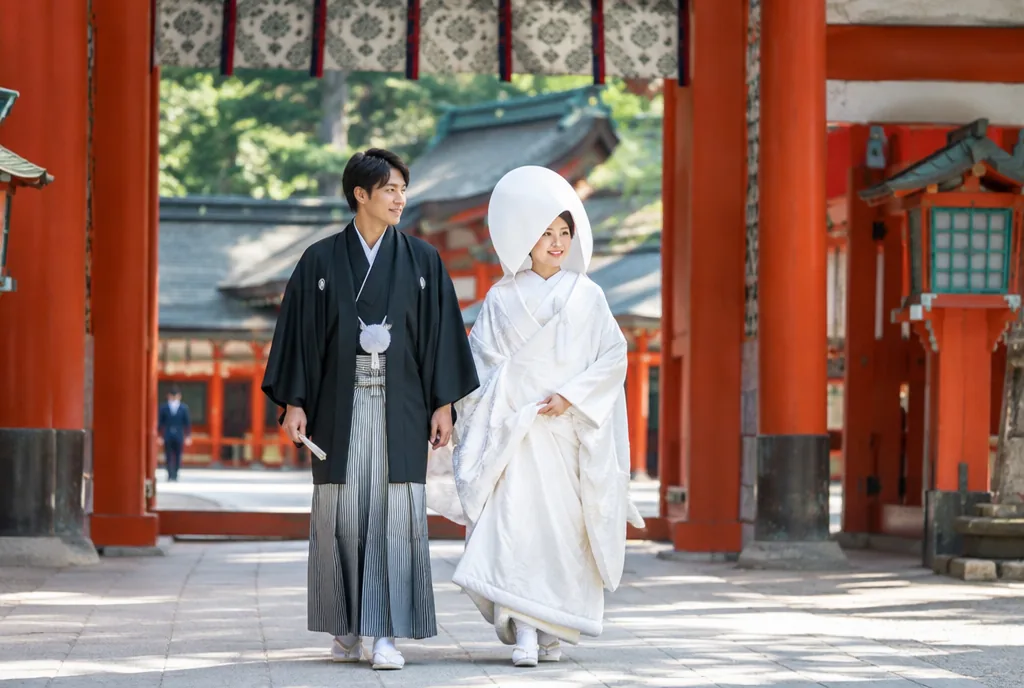
In 1868, the Meiji government forcibly separated Shinto and Buddhism through the shinbutsu bunri policy. The resulting haibutsu kishaku movement destroyed thousands of temples and Buddhist artifacts. Yet the older habit of overlap remains visible in practice: Shinto is commonly used for life-affirming occasions such as births and weddings, while Buddhism is commonly used for funerals and ancestor veneration.
Japan has about 80,000 Shinto shrines and 77,000 Buddhist temples, more than its roughly 49,000 convenience stores. The comparison does not mean that every site is equally active, but it makes the physical presence of both traditions easier to grasp.
What Japanese Buddhists believe and practice at home
Japanese Buddhist schools differ radically in method, but a broad shared idea is that all beings possess Buddha-nature and can attain liberation. Zen highlights self-power, or jiriki, through disciplined practice. Pure Land teaching emphasizes Other Power, or tariki, through Amida. The contrast explains why meditation is important without being the only recognizable Buddhist practice in Japan.
About 60 percent of Japanese households have a butsudan, a Buddhist home altar. Families honor ancestors there with incense, water, rice, and flowers. For many people, these actions are family and cultural traditions rather than an identity they would describe simply as “religious.” Temple visits at New Year, grave cleaning at Obon, and Buddhist funeral rites may all be part of that pattern.
Affiliation figures reflect the same overlap. The Agency for Cultural Affairs reports roughly 80 to 83 million people identifying with Buddhism, while many of the same people also practice Shinto. The total can exceed Japan’s population because these are not mutually exclusive labels.
What funerals, Obon, and temple visits reveal about lived Buddhism
For many families, the most direct contact with Buddhist clergy comes at a funeral. Around 90 percent of funerals in Japan follow Buddhist rites. A typical service includes a wake, or tsuya, the night before; incense offerings called shōkō; and a posthumous Buddhist name, or kaimyō. After cremation, relatives pick pieces of bone from the ashes with chopsticks in a ritual called kotsuage, a practice unique to Japanese Buddhist death rites.
Obon is a three-day Buddhist festival honoring ancestral spirits. It is held on August 15, though Tokyo commonly observes July 15 and some areas follow the lunar calendar’s seventh month. Families visit and clean graves, hang lanterns to guide spirits, leave food at the butsudan, and join Bon Odori dances. The observance ends with okuribi, sending fires; Kyoto’s Daimonji bonfires on August 16 are a well-known example.
A temple visit has its own etiquette, distinct from a shrine visit. A simple sequence is:
- Bow once on arrival.
- Place a coin as an offering.
- Press your hands together in prayer.
- Bow once more when you finish.
Unlike at a Shinto shrine, visitors do not clap at a Buddhist temple. On New Year’s Eve, temples across the country ring a large bell 108 times in joya no kane, a rite meant to cleanse the 108 human desires recognized in Buddhism. The first shrine or temple visit of the year is called hatsumōde; by National Police Agency estimates, more than 90 million people visit one during the first three days of January.
Common misconceptions about Buddhism in Japan
- “Japanese Buddhism means Zen.” Zen is influential, but it is one part of a wider family of schools that includes Tendai, Shingon, Pure Land, Nichiren, and older scholastic schools. Pure Land schools together are Japan’s largest Buddhist denomination by membership, with roughly 22 million adherents.
- “Buddhism and Shinto are competing choices.” They were institutionally intertwined for more than a thousand years. The 1868 separation changed institutions, not every person’s pattern of practice.
- “Buddhism is only meditation.” Meditation is central in Zen, while other traditions foreground recitation, ritual, devotion, home offerings, funerals, and ancestor memorials.
- “Buddhism is only ancient history.” Temples, home altars, Obon, funeral rites, and New Year visits show how it continues to organize family and seasonal life.
Frequently Asked Questions
What is different about Japanese Buddhism?
Its history is marked by the prominence of Kamakura-period Pure Land, Nichiren, and Zen schools rather than only earlier scholastic traditions. It also developed through a long fusion with Shinto and is especially visible in ancestor rites, funerals, and household practice.
What do Japanese Buddhists believe?
Many schools teach that all beings possess Buddha-nature and can attain liberation. They differ over the path: Zen emphasizes self-power through practice, while Pure Land teaching relies on Amida’s Other Power through the nembutsu.
How did Buddhism arrive in Japan?
It arrived via Baekje in Korea around the mid-sixth century. Accounts date the official introduction to 538 or 552 and describe a mission to Emperor Kinmei carrying a Buddha statue, sutras, and monks and nuns.
How did Zen influence Japanese culture?
Zen shaped the tea ceremony, the use of matcha, dry landscape gardens, ink painting, calligraphy, flower arrangement, and martial disciplines such as kendo and kyūdō. Its aesthetic influence emphasizes simplicity, asymmetry, and empty space.
How do Buddhism and Shinto coexist?
For centuries they shared sites and practices through shinbutsu-shūgō. Although the state ordered their separation in 1868, many people still use Shinto for births and weddings and Buddhism for funerals and honoring ancestors.