Is Okinawa part of Japan? Yes. Okinawa Prefecture is Japan’s southernmost prefecture, a chain of about 160 islands, 49 of them inhabited. Yet the answer opens a larger story: these islands were once the independent Ryukyu Kingdom, then a battlefield, then a territory under U.S. administration for 27 years. That history helps explain why Okinawa is unmistakably part of Japan while retaining a cultural and political identity that can feel distinct from mainland Japan.
Okinawa Is Japan’s Southernmost Prefecture
Okinawa is governed as a Japanese prefecture. Its present status dates to 1879, when the Meiji government abolished the Ryukyu Kingdom and created Okinawa Prefecture. The islands are therefore not a separate country, a U.S. territory, or a Japanese colony in today’s legal arrangement.
That simple description can obscure the scale of the archipelago and the depth of its past. “Okinawa” can refer to the prefecture, to Okinawa Island, or more broadly to an island culture shaped by maritime connections. Keeping those meanings apart makes the topic easier to follow: the prefecture belongs to Japan, but the islands also have a history that did not begin with modern Japan.
Why Okinawa Feels Different From Mainland Japan
The biggest reason is historical independence. For more than 450 years before annexation, the Ryukyu Kingdom had its own monarchy, language, and tributary relationships with China. Its position between Japan, China, Korea, and Southeast Asia made it a maritime crossroads rather than a remote extension of one mainland.
Language makes that difference especially clear. Uchinaguchi, or Okinawan, as well as Miyako, Yaeyama, and Yonaguni are Ryukyuan languages within the Japonic family. They are not mutually understandable with mainland Japanese; the contrast has been compared to French and Spanish. UNESCO recognizes multiple Ryukyuan languages as endangered, with Yaeyama and Yonaguni classified as severely endangered.
After 1879, assimilation policies suppressed Ryukyuan language and culture. One practice, the “dialect tag” system, publicly shamed students for speaking Ryukyuan. The legacy matters because cultural difference is not simply a matter of regional food or scenery. It includes languages whose survival has been shaped by political pressure.
From the Ryukyu Kingdom to Okinawa Prefecture
The Ryukyu Kingdom was unified in 1429 when King Sho Hashi brought the three principalities of Hokuzan, Chuzan, and Nanzan under one rule after roughly a century of the Sanzan period. Shuri Castle on Okinawa Island became the royal residence and administrative center.
Trade gave the kingdom influence beyond its size. Ryukyuan ships connected Southeast Asia, China, Korea, and Japan, carrying goods including sulfur, horses, and swords to China and returning with ceramics, silk, and coins. Tributary ties with China date back to 1372 and continued under the Ming and Qing dynasties.
In 1609, the Satsuma domain invaded with 3,000 men in 100 ships, with authorization from the Tokugawa shogunate. Ryukyu became a Satsuma vassal, but it was allowed to preserve a nominally independent relationship with China. That arrangement was useful for continuing trade, even though the kingdom’s autonomy had narrowed.
The final change came through the Ryukyu Disposition. The Meiji government created the Ryukyu Domain in 1872 and abolished it on March 27, 1879, proclaiming Okinawa Prefecture. The last king, Sho Tai, was forcibly relocated to Tokyo. Annexation met resistance, particularly in Miyako and Yaeyama. In the Kochi Incident, locals killed a Japanese interpreter before the resistance was suppressed.
War, U.S. Rule, and Reversion Changed the Islands
Okinawa’s modern history cannot be understood without the Battle of Okinawa. From April 1 to June 22, 1945, the 83-day campaign became the largest ground battle on Japanese soil during the Pacific War. Roughly one in four Okinawa residents died. An estimated 150,000 civilian Okinawans were killed, many in crossfire or in mass suicides driven by Imperial Japanese propaganda about American atrocities.
After the war, the Ryukyu Islands came under U.S. military administration. The U.S. Army Ryukyu Islands governed from 1945 to 1972, while military infrastructure expanded. By 1950, Okinawa had become one of the United States’ most important forward operating hubs in the Pacific.
| Year or date | What changed |
|---|---|
| 1429 | King Sho Hashi unified the Ryukyu Kingdom. |
| 1609 | Satsuma invaded; Ryukyu became a vassal state. |
| March 27, 1879 | Japan abolished the Ryukyu Domain and proclaimed Okinawa Prefecture. |
| 1945–1972 | The Ryukyu Islands were under U.S. administration. |
| May 15, 1972 | Okinawa returned to Japanese sovereignty. |
The Okinawa Reversion Agreement was signed in 1971 and took effect on May 15, 1972. Japan paid the United States $320 million under the agreement. Reversion brought Japanese sovereignty back after 27 years, but it did not remove the U.S. military presence: the United States retained 88 major facilities while returning 46 smaller ones. Official ceremonies and protests took place side by side.
Why U.S. Military Bases Remain Central to Okinawa
The short answer is that bases expanded during U.S. administration and remained after reversion. Their concentration is central to the debate. Okinawa Prefecture accounts for only 0.6% of Japan’s land area but hosts approximately 74% of U.S. military facilities stationed in Japan.
There are 33 U.S. military bases in Okinawa. They cover about 185 square kilometers (roughly 71 square miles) of the prefecture’s 2,281 square kilometers (about 881 square miles) and up to 18% of Okinawa Island. About 47,300 U.S. military personnel and family members live in Okinawa, including about 25,000 uniformed troops.
The relocation of Marine Corps Air Station Futenma to Henoko Bay is the most contentious example. The plan to move the facility to the Henoko district of Nago has faced local and gubernatorial opposition for more than 20 years, including protests and legal battles. This is why the question of bases is not only about international security. For many Okinawans, it is also about land, local decision-making, and the uneven concentration of facilities within Japan.
Culture Carries a Ryukyuan History Forward
Okinawan culture offers visible evidence of the islands’ historical connections. The sanshin, a three-stringed lute inspired by a Chinese prototype, is its iconic instrument. A folk saying holds that an Okinawan would save a sanshin before other possessions in a fire, unlike a mainland Japanese person who would save a sword.
During the Obon season in mid-August, Eisa performers honor ancestors with taiko and paranku drums, colorful costumes, dancing, and sanshin music. Kumi-odori, an 18th-century dance-theater form that combines music, dance, elaborate costume, and storytelling, was added to UNESCO’s Intangible Cultural Heritage list in 2010.
Karate also originated in Okinawa. It developed under the weapon ban that Satsuma imposed after 1609 and was originally called te or “Chinese hand”; the modern name means “empty hand.” Gichin Funakoshi introduced karate to mainland Japan in 1922. Food records another exchange: taco rice, a bed of rice topped with seasoned ground beef, lettuce, tomatoes, and cheese, was invented in the 1950s under U.S. military influence.
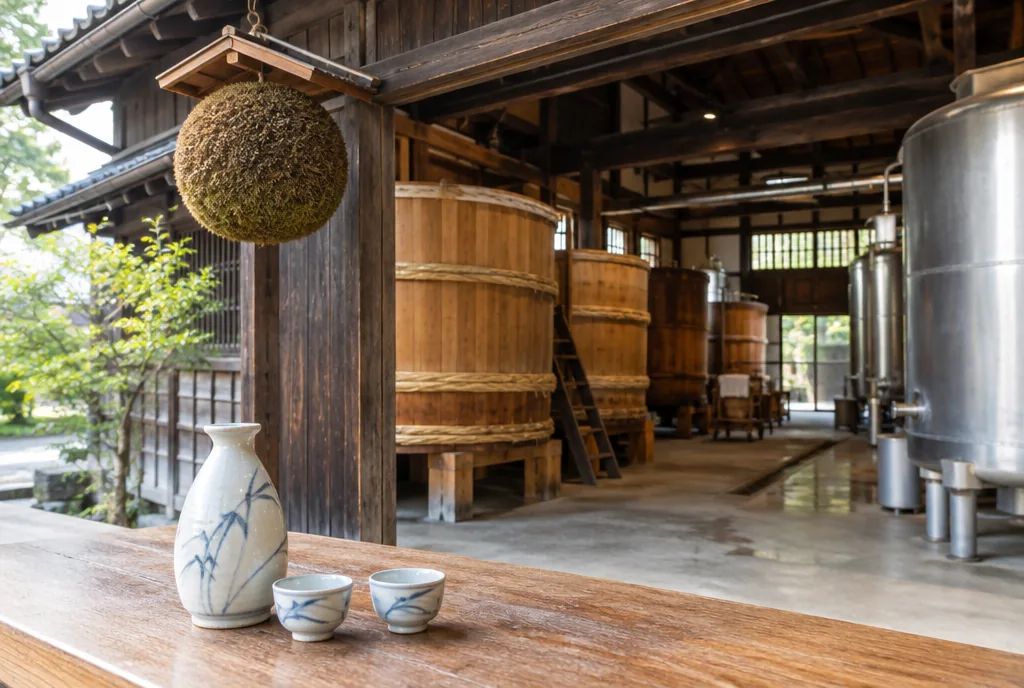
Other traditions show continuity rather than spectacle. Awamori, distilled from long-grained Thai rice with black koji mold, has been made in Okinawa for more than 600 years. The values yuimaaru, or mutual cooperation, and nuchi du takara, “life is the greatest treasure,” express a community-centered island outlook.
Okinawa’s Blue Zone Is About Food and Community
Okinawa is one of the world’s five original Blue Zones, regions identified for populations living significantly longer than the global average. The label points to a pattern, not a longevity guarantee. Traditional eating in Okinawa is about 90% plant-based, with purple or orange sweet potato as the largest calorie source and less than 1% of calories from fish, meat, dairy, or eggs.
Hara hachi bu, a Confucian-inspired phrase recited before meals, means eating until 80% full. Social habits are part of the picture too. A moai is a lifelong circle of friends, typically five people, offering emotional, social, and financial support. Ikigai, a reason to get up in the morning, describes the value of having a role and feeling needed into old age.
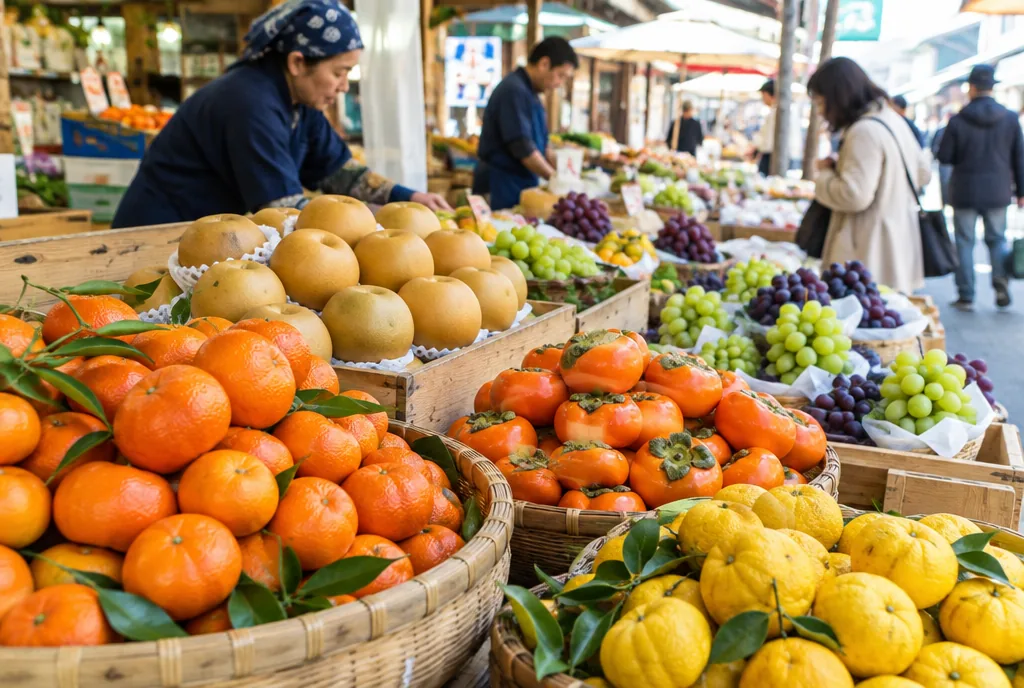
Goya, mozuku seaweed, and shikuwasa citrus are key foods associated with the traditional diet. Ogimi Village and Kunigami in northern Okinawa are known for high longevity and are considered representative of the original Blue Zone lifestyle. At the same time, younger generations are increasingly adopting Western fast-food habits and do not share the same longevity benefits.
Common Misconceptions About Okinawa
“Okinawa is not really Japan.”
Okinawa is part of Japan and has been a prefecture since 1879. Its previous history as the Ryukyu Kingdom explains why that legal status and cultural identity should not be treated as the same question.
“Reversion in 1972 ended the base issue.”
Reversion returned Japanese sovereignty, but major U.S. facilities remained. Their land use and concentration continue to shape Okinawan public debate.
“Blue Zone status means everyone in Okinawa lives exceptionally long.”
The Blue Zone designation describes traditional patterns and populations, not an outcome guaranteed for every resident. Changing diets among younger people are a direct reminder that the pattern can change.
Frequently Asked Questions
Is Okinawa part of Japan?
Yes. Okinawa is Japan’s southernmost prefecture and was formally made Okinawa Prefecture in 1879.
Why is Okinawa different from mainland Japan?
It was an independent Ryukyu Kingdom for more than 450 years, with its own monarchy, languages, and trade relationships. Its Ryukyuan languages are distinct from mainland Japanese.
When did Okinawa return to Japan?
Okinawa returned to Japanese sovereignty on May 15, 1972, after 27 years of U.S. administration that began in 1945.
Why are there U.S. bases in Okinawa?
U.S. military infrastructure expanded during the 1945–1972 administration and major facilities were retained under the reversion agreement. Okinawa now hosts about 74% of U.S. military facilities in Japan.
Are Okinawans ethnically Japanese?
Ryukyuans are an indigenous Japonic-speaking East Asian ethnic group from the Ryukyu Islands. The United Nations recognizes Ryukyuans as indigenous people, while the Japanese government considers them a subgroup of the Japanese people and does not recognize an official minority status.