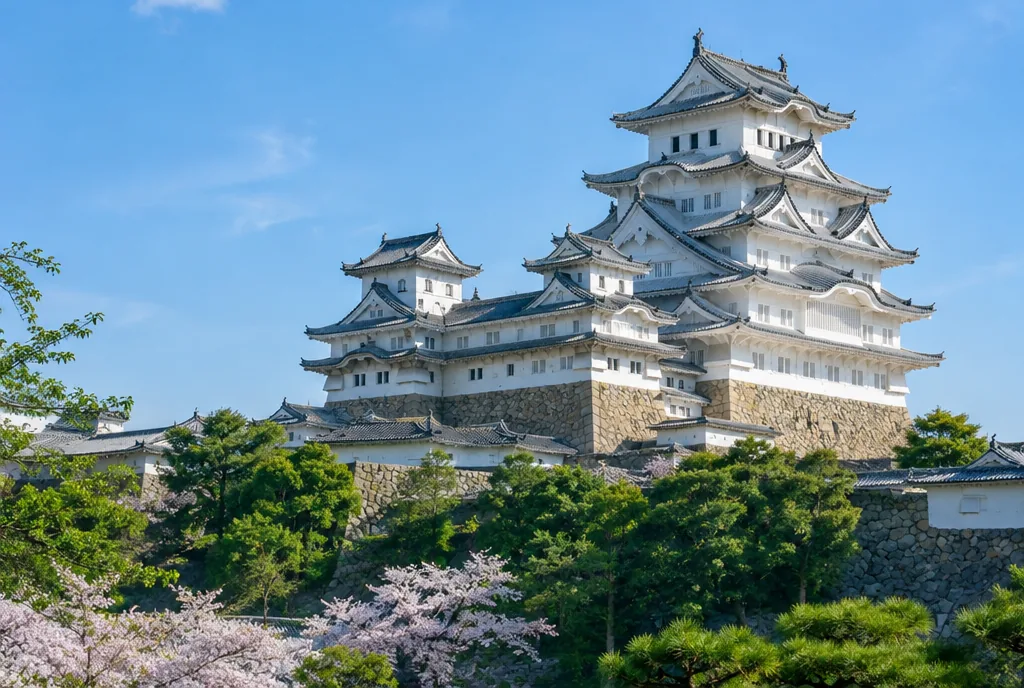
When you enter a sacred site in Japan, the first question is often simple: is this a Buddhist temple or a Shinto shrine? Japan temples and shrines stand side by side in cities, mountains, and villages, but they differ in religion, architecture, symbols, and visitor etiquette. Knowing the difference helps you behave correctly and understand what you are looking at.
Exploring Japan Temples: Core Religious Roots and Key Differences
Japan has two major religious traditions that exist side by side: Buddhism and Shinto. A japanese temple belongs to Buddhism, centering its devotion on the Buddha, bodhisattvas, or Buddhist deities. In contrast, a japanese shrine represents Shinto, Japan’s indigenous spiritual tradition centered on the reverence of kami (nature spirits or deities).
Historically, these two faiths were not practiced in isolated silos. Until 1868, Shinto and Buddhism were syncretically blended in Japan, a practice known as shinbutsu shugo. During this era, shrines and temples coexisted closely. However, in 1868, the Meiji government issued the shinbutsu bunri edicts, which forcibly separated kami and buddhas, as well as shrines and temples.
This forced separation triggered the haibutsu kishaku movement, which resulted in the destruction of many Buddhist temples across the country.
The number of sacred sites is large. According to the Agency for Cultural Affairs, Japan is home to about 77,000 Buddhist temples and roughly 81,000 Shinto shrines (often cited generally as about 80,000 shrines). When combined, temples and shrines outnumber the nation’s convenience stores, which number around 56,000. Yet this network faces demographic challenges: over the next 25 years, an estimated 27,000 of Japan’s 77,000 Buddhist temples are expected to close due to declining priest numbers and shrinking local communities.
Temple vs Shrine: Architectural Markers and Naming Conventions
When you compare a temple vs shrine, start at the entrance. Shinto shrines are marked by a torii gate, which signifies the transition from the mundane secular world to the sacred realm of the kami. At a Buddhist temple, visitors typically pass through a sanmon (mountain gate).
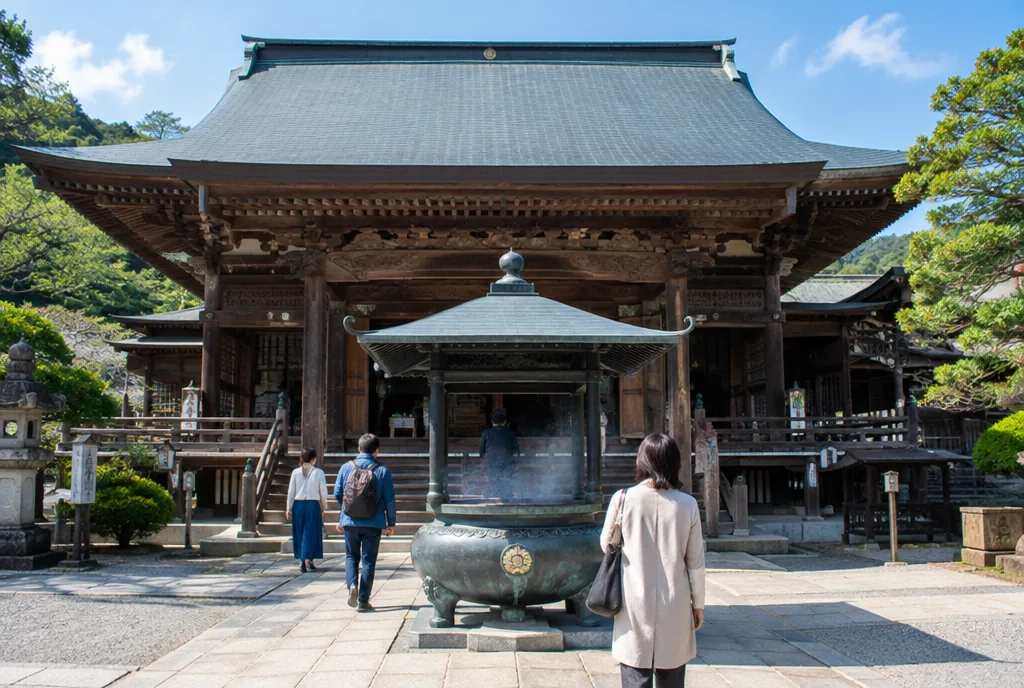
Beyond the entrance gate, exterior features reinforce the distinction. Temples frequently feature a large incense burner, designated as a koro or jokoro, positioned in front of the main hall. Shinto shrines provide water purification pavilions for the temizu ritual, and visitors at shrines often pull a rope to ring a bell before praying to attract the kami’s attention.
The name gives another clear clue. In Japanese, Buddhist temples are called tera (寺). In compound names, this character is pronounced in its voiced form as -dera or via its reading as -ji. Additionally, some temples utilize the suffix -in (院), which translates as “cloister” or “hall.” Conversely, Shinto shrines use different suffixes: -jinja, -taisha, -jingu, and -gu. The suffix alone usually indicates whether a site is a temple or a shrine.
| Feature | Buddhist Temple (Tera / -ji / -in) | Shinto Shrine (-jinja / -taisha / -jingu) |
|---|---|---|
| Primary Faith | Buddhism | Shinto |
| Deities Worshipped | The Buddha, Bodhisattvas, Buddhist deities | Kami (nature spirits / deities) |
| Entrance Architecture | Sanmon (mountain gate) | Torii (sacred entrance gate) |
| Purification Feature | Koro / jokoro (incense burner) | Temizu water pavilion with ladles |
| Prayer Method | Silent prayer with palms pressed (gassho); do not clap | 2 bows, 2 claps, silent prayer, 1 bow (2-2-1) |
| Typical Name Endings | -ji, -dera, -in, tera | -jinja, -taisha, -jingu, -gu |
| National Estimate | Approximately 77,000 | About 80,000 to 81,000 |
Rituals and Manners: Proper Temple Etiquette and Shrine Customs
Good temple etiquette is simple once you know the basics. Temples and shrines are living places of worship, so the rules matter.
Upon arriving at a temple’s sanmon gate, bow slightly before entering and again when leaving as a sign of respect. Avoid walking down the center of the path, as the center is traditionally reserved for deities; visitors should walk along the side. If a large incense burner (koro or jokoro) stands in front of the main hall, visitors can buy incense sticks, light them, let the flame burn briefly, and waft the smoke toward themselves using their hands. The smoke is traditionally believed to be purifying and healing. Visitors must never blow out the flame with their mouth.
When approaching the main temple hall, adhere to the following sequence of worship:
- Toss a coin into the offering box (saisen-bako) as a small offering.
- Place your palms together in the posture known as gassho.
- Bow your head and pray in quiet contemplation.
- Do not clap your hands; clapping is strictly a shrine custom.
By comparison, approaching a Shinto shrine involves a distinct set of steps. Visitors perform the temizu water purification ritual before praying: take the ladle in your right hand and rinse your left hand; switch the ladle to your left hand and rinse your right; switch back to your right hand, pour water into your cupped left hand to rinse your mouth, and then tilt the ladle upright to let water run down the handle to clean it. Never drink directly from the ladle. At the shrine altar, visitors often pull a rope to ring a bell to attract the kami’s attention, deposit a coin, and perform the classic 2-2-1 prayer sequence: bow twice, clap twice, offer a silent prayer, and bow once more. In addition, omikuji (fortune slips) are commonly available at shrines; if a visitor draws a bad fortune, it is tied to a designated tree or wire rack at the shrine to leave the bad luck behind.
Both settings share fundamental rules of decorum. Temples are active places of worship: visitors must keep their voices low, avoid eating or smoking on the grounds, and follow marked routes. Early mornings offer the quietest and most atmospheric time to visit. While photography is generally allowed in temple grounds, visitors must heed signs indicating restricted areas and never photograph ceremonies, funerals, or worshippers at prayer without permission.
Japan’s Oldest Temple: Horyu-ji
Located in Ikaruga, Nara Prefecture, Hōryū-ji (法隆寺) is one of Japan’s oldest Buddhist temples. Founded in 607 by Prince Shōtoku and Empress Suiko, its full formal name is Hōryū Gakumonji (法隆学問寺), which translates as “Learning Temple of the Flourishing Law,” reflecting its purpose as both a seminary and a monastery. Today, Hōryū-ji serves as the headquarters of the Shōtoku sect of Buddhism.
According to ancient records in the Nihon Shoki, all buildings across the complex were burned down by lightning in the year 670. Reconstruction began soon after. The temple’s five-story pagoda, reconstructed by around 711, is among the oldest surviving wooden structures in the world.
Hōryū-ji was inscribed as Japan’s first UNESCO World Heritage Site in 1993 under the name “Buddhist Monuments in the Hōryū-ji Area.” The complex houses over 180 of Japan’s designated National Treasures and Important Cultural Properties. Among these masterworks is the Tamamushi Shrine (pre-693), recognized as the oldest surviving shrine of its kind in East Asia. The grounds also house the Yumedono (Hall of Dreams), a hall associated with Prince Shōtoku’s meditation.
Famous Temples in Japan: From Tokyo’s Senso-ji to Kyoto’s Golden Pavilions
Travelers exploring Japan encounter historic landmarks that highlight the depth of Buddhist heritage. Among the most famous temples in japan are Tokyo’s Sensō-ji and Kyoto’s Kinkaku-ji and Kiyomizu-dera.
Sensō-ji, located in Asakusa, Tokyo, is the oldest temple in Tokyo, founded in 645 AD. Dedicated to Kannon, the bodhisattva of compassion, Sensō-ji’s official name is Kinryū-zan Sensō-ji (金龍山浅草寺, meaning “Golden Dragon Mountain Sensō-ji”), and it is also known as Asakusa Kannon. Welcoming over 30 million visitors annually, it is the most widely visited religious site in the world. According to legend, Sensō-ji began in 628 when two brothers, Hinokuma Hamanari and Takenari, pulled a gold Kannon statue measuring approximately 5.5 cm tall from the Sumida River while fishing. The statue is preserved as a hidden image (hibutsu) that is never publicly displayed.
Sensō-ji is the 13th stop on the Bandō Sanjūsankasho pilgrimage route, a circuit of 33 temples dedicated to Kannon across the Kantō region. The Nakamise-dōri shopping street leading to the temple dates back to the early 12th century, when neighbours of the temple were granted permission to set up shops on the approach. During World War II, Sensō-ji was destroyed during the firebombing air raid on Tokyo on 10 March 1945, after which the main hall was rebuilt in the 1950s. At the entrance, the famous Kaminarimon (Thunder Gate) stands 11.7 m tall, 11.4 m wide, covering 69.3 m².
Sensō-ji also maintains a connection to Shinto tradition through the Sanja Matsuri festival in late spring. This event, Sensō-ji’s largest festival, is organised by the adjacent Asakusa Shrine. It is a Shinto festival honoring the founding story of the Buddhist temple, demonstrating the lasting syncretism between the two traditions.
In Kyoto, Kinkaku-ji (Golden Pavilion) offers a different architectural expression. Its official name is Rokuon-ji (鹿苑寺, meaning “Deer Garden Temple”), while Kinkaku (Golden Pavilion) is the popular nickname for its gold-leaf-covered reliquary hall (shariden). Built in 1397 as a retirement villa for Shogun Ashikaga Yoshimitsu, the complex was converted to a Zen temple after his death. The top two floors of the pavilion are coated in 0.5 µm gold leaf.
Kinkaku-ji was burned down on 2 July 1950 at 2:30 am by a 22-year-old novice monk, Hayashi Shoken. This event was fictionalized in Yukio Mishima’s 1956 novel The Temple of the Golden Pavilion. The pavilion was rebuilt in 1955, faithfully recreating the original structure with restoration costs covered by public donations. Today, Kinkaku-ji is a designated National Special Historic Site, a National Special Landscape, and one of the 17 Historic Monuments of Ancient Kyoto inscribed as a UNESCO World Heritage Site.
Another landmark in Kyoto is Kiyomizu-dera, founded in 778, predating the establishment of the ancient capital Heian-kyō. The current main hall was rebuilt in 1633, supported by 18 pillars made from 400-year-old zelkova trees without using a single nail. The main hall’s stage juts out 13 m over the hillside, covers approximately 200 m², and is laid with hinoki (Japanese cypress) boards. This architectural feature inspired the Japanese saying “to jump off the stage of Kiyomizu” (清水の舞台から飛び降りる), which means making a bold decision or “taking the plunge.”
Kyoto Temples and the Zen Aesthetic
Kyoto, the former imperial capital, has an especially dense concentration of temples and shrines. In Kyoto alone, there are approximately 1,700 Buddhist temples and around 800 Shinto shrines. The city features 17 UNESCO World Heritage Sites collectively known as the “Historic Monuments of Ancient Kyoto,” which include Kinkaku-ji, Kiyomizu-dera, Ryōan-ji, Nijō Castle, and Tō-ji.
Among Kyoto temples, Ryōan-ji, founded in 1450, is famous for its karesansui (dry landscape) rock garden. The garden features 15 stones arranged on raked white gravel in such a manner that from any angle, a viewer can never see all 15 stones at once.
Kyoto also features Tō-ji Temple, whose five-story pagoda stands 55–57 m tall, making it the tallest wooden pagoda in Japan.
Ginkaku-ji (Silver Pavilion) was built in 1482 as a retirement villa for Shogun Ashikaga Yoshimasa and converted into a Zen temple after his death in 1490. Despite its name, the pavilion was never actually clad in silver.
Collecting Goshuin: Sacred Pilgrimage Stamps and Proper Practice
For visitors exploring Japan’s sanctuaries, collecting goshuin (御朱印) is a traditional devotional custom. Goshuin are stamps or seals collected at temples and shrines as proof of a visit. The practice dates back to the Nara Period (710–794 AD), when pilgrims on circuits like the Kumano Kodo needed a way to track which temples they had visited.
Goshuin are collected in a dedicated accordion-folded notebook called a goshuinchō (御朱印帳). Proper etiquette considers it appropriate to use separate books for Buddhist temple stamps and Shinto shrine stamps.
To receive a goshuin, visitors should follow proper procedure:
- First pay your respects at the temple or shrine by praying properly before requesting a seal.
- After praying, proceed to the goshuin reception desk.
- Present your goshuinchō to the attendant.
- A monk or priest will hand-write the stamp and the date of your visit with ink and calligraphy.
Not all temples and shrines offer goshuin. Temples of particular sects or some smaller locations may not provide them, so visitors should check ahead when planning their visits.
Common Misconceptions and Cultural Myths
These are the most common misunderstandings about temples and shrines:
One common mistake is clapping while praying at a Buddhist temple. Clapping is a ritual practice reserved exclusively for Shinto shrines. At a Buddhist temple, prayer should remain quiet: simply place your palms together in gassho and bow your head without clapping.
Another misconception involves the temizu water purification basins. The water is meant to rinse hands and mouth symbolically; visitors must never drink directly from the purification ladle.
Visitors also mistakenly walk directly down the center of an approach path. Walking through the center of the path is reserved for the deities (kami), so visitors should walk to the side.
A prevalent historical misconception surrounds Ginkaku-ji, the “Silver Pavilion.” Because Kinkaku-ji is coated in gold leaf, many people assume Ginkaku-ji was once coated in silver. In fact, it was never clad in silver.
Finally, visitors sometimes assume that Buddhism and Shinto were always separate institutions. In reality, until 1868, Shinto and Buddhism were syncretically blended in Japan (shinbutsu shugo). It was only through the Meiji government’s shinbutsu bunri edicts that kami and buddhas, as well as shrines and temples, were forcibly separated.
Frequently Asked Questions
What are Japanese temples called?
Japanese Buddhist temples are called tera (寺). Temple names frequently end in -dera (the voiced form) or -ji, both readings of the character 寺. Some temples also use the suffix -in (院), translated as “cloister” or “hall.” Shinto shrines, by contrast, use suffixes such as -jinja, -taisha, -jingu, and -gu.
What is the difference between a Japanese shrine and a temple?
Shrines are Shinto, dedicated to kami (nature spirits or deities), marked by a torii gate, and use a 2-bow, 2-clap, 1-bow prayer sequence. Temples are Buddhist, dedicated to the Buddha, bodhisattvas, or Buddhist deities, typically feature a sanmon gate and an incense burner (koro), and require quiet prayer with palms together (gassho) without clapping.
What is Japan’s oldest temple?
Hōryū-ji in Ikaruga, Nara Prefecture, is one of Japan’s oldest Buddhist temples, founded in 607 by Prince Shōtoku and Empress Suiko. Reconstructed by around 711 after a lightning fire in 670, its five-story pagoda is among the oldest surviving wooden structures in the world.
How many temples are in Japan?
According to the Agency for Cultural Affairs, Japan has about 77,000 Buddhist temples and roughly 81,000 Shinto shrines (often referenced as about 80,000 shrines). Over the next 25 years, an estimated 27,000 of Japan’s 77,000 temples are expected to close due to declining priest numbers and shrinking local communities.
Can visitors take photos at Japanese temples?
Photography is generally allowed on temple grounds, but visitors must heed signs indicating restricted areas and never photograph ceremonies, funerals, or worshippers at prayer without permission.